
Utility Pole Testing
HomeUtility Pole Testing
Enhancing Infrastructure Reliability with Utility Pole Testing and Resistography Technology
Utility Pole Testing
Utility poles are critical components of electrical and communication networks. Over time, exposure to moisture, insects, fungi, and physical stresses can weaken the wood and compromise structural integrity. A proactive pole testing program improves safety, reliability, and cost efficiency by identifying deterioration before failure occurs.
Why Regular Testing Matters
-
Prevents power outages and service disruptions
-
Reduces safety risks and emergency repair costs
-
Helps avoid premature pole replacement
-
Supports regulatory compliance and budget planning
Inspection and Assessment Methods
To accurately evaluate pole condition, multiple inspection techniques are used together:
Visual & Sounding
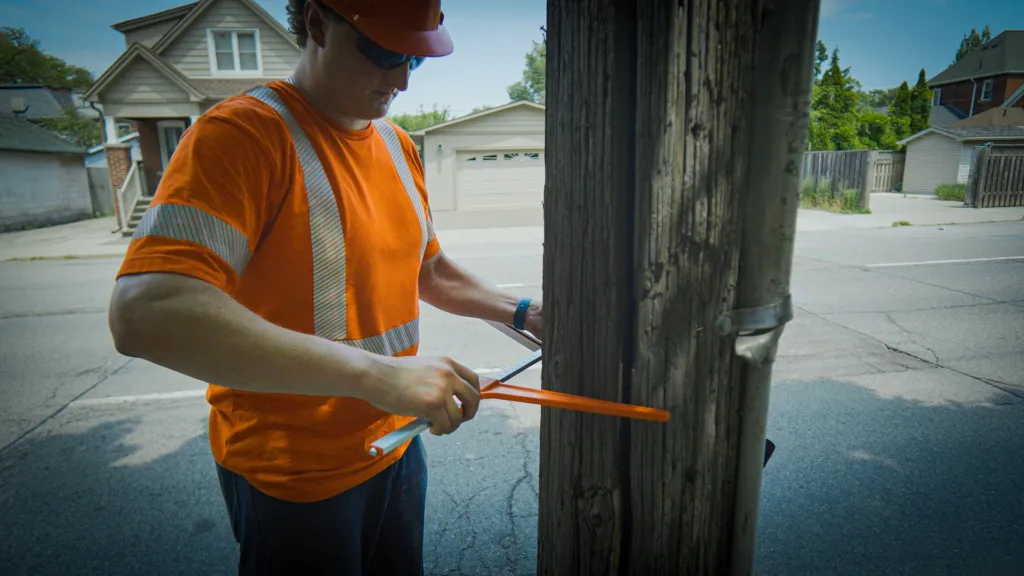
Identifies surface defects, leaning, and hardware issues
Bore Testing
Detects internal decay or insect damage
Partial or Full Excavation
Reveals below-grade rot and shell thickness
Remedial Treatments
Restores preservative protection to slow decay progression
Resistography Testing
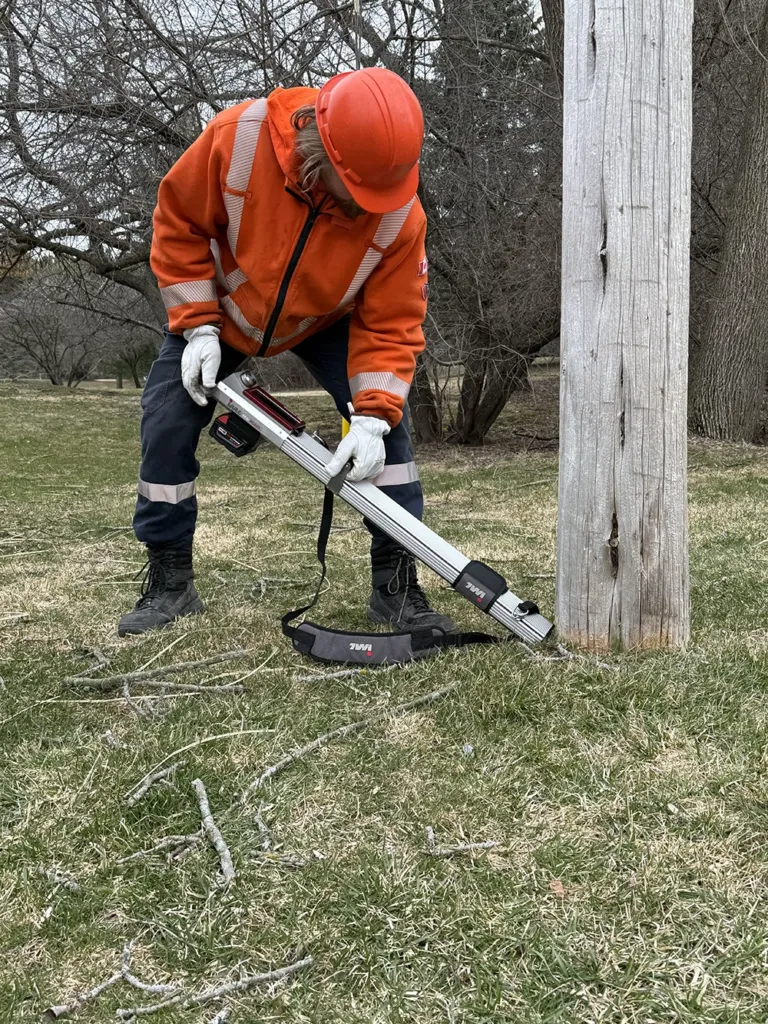
Resistography enhances traditional inspection by measuring wood density with a fine micro-drill. This produces a digital record of internal pole condition.
Detects:
-
Internal decay
-
Voids and cavities
-
Cracks or rot
-
Remaining shell-wall thickness
Advantages:
-
Quantitative data for objective evaluation
-
Minimal wood damage (3 mm needle)
-
Allows below-grade assessment without excavation
-
Immediate on-site results
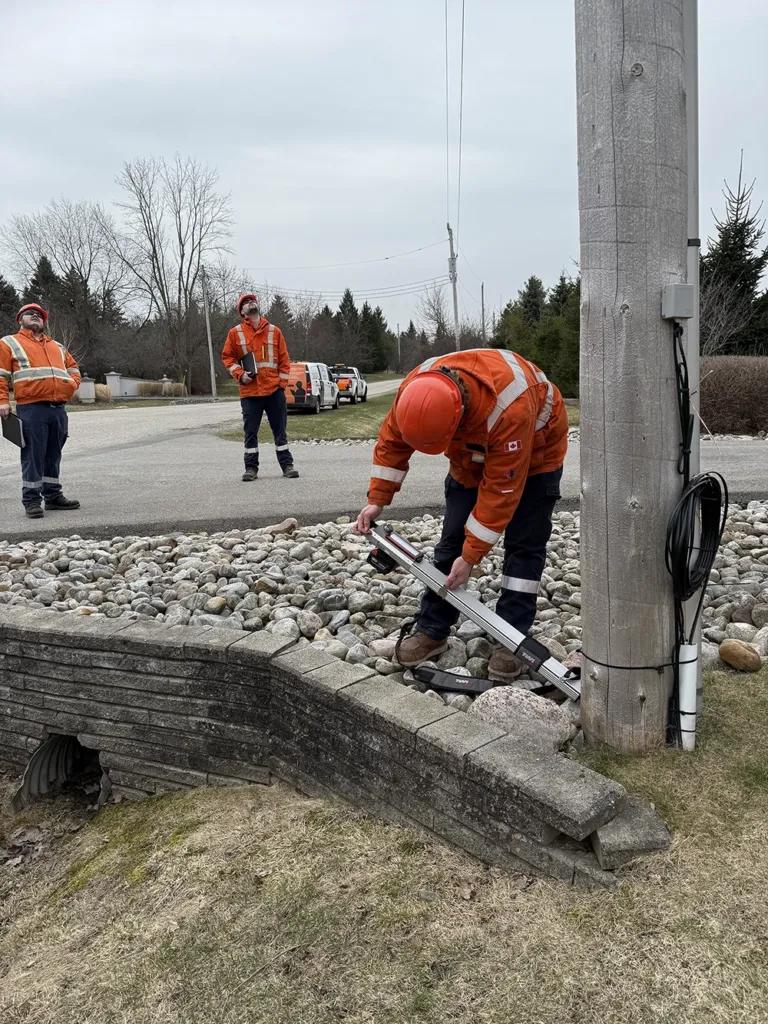
Resistography is especially valuable when poles are set in concrete or asphalt, where excavation is difficult or disruptive.
Program Benefits
Combining traditional inspection with Resistography provides:
-
Accurate, data-driven decision making
-
Improved reliability and system safety
-
Optimized maintenance and replacement planning
-
Extended pole service life
-
Reduced operational and capital costs
Result
A more resilient, cost-effective distribution network built on informed maintenance and long-term infrastructure planning.
Utility Pole Testing and Structural Integrity Assessment
Ensure your network stays reliable and safe. Request a Utility Pole Testing assessment today.